




[ad_1]
When Stephan Weishaupt started looking for a weekend home outside of Toronto, buying a 19th-century log cabin was the last thing on his mind.
Mr. Weishaupt, founder of the Weishaupt Design Group and president of a furniture company called Avenue Road, has long focused on all things modern. When a friend told him about a 100-acre property of rolling hills, forest and canyons in Caledon East, Ontario, he was only interested in the land.
“I walked some trails and fell in love with it,” said Mr Weishaupt, 45.
The previous owners had demolished some old farm buildings and started building some new ones, but the work stalled and nothing was done. The only habitable structure is a caretaker’s cottage with clapboard siding. But “the roof was sagging and was in dire need of repairs,” Mr Weishaupt said.
Either way: His plan was to raze the building to the ground and start over. So he bought the property in July 2018 for about $3.3 million and began building a design team.
When he examined the cabin more closely, however, he made a discovery: Between the later additions, and covered with siding, were hand-hewn hemlock logs.
Curious, Mr. Weishaupt hired ERA Architects to investigate. The architects removed siding and additions to reveal a charming old cottage.
“It’s a great find,” said ERA Senior Researcher David Winterton, who estimates the building to be more than 150 years old. “But it’s in a really dilapidated condition.”
Faced with such an unexpected discovery, Mr. Weishaupt changed his mind about demolishing the hut and decided to transform it into his new home.
It’s small — about 600 square feet, spread over two floors — “but I think it’s big enough,” he says. “Just me and my dog.”
However, the stripped-down structure is far from ready to move in. It’s just a wooden shell, exposed and some parts of the log have rotted away.
Working with Mel Shakespeare, Heritage House’s historic home specialist, the architects demolished the structure, numbered the logs, treated and restored them in Mr. Shakespeare’s studio. They poured new foundations deep enough to provide Mr Weesopter with a full basement, then rebuilt the house on top, filling in the gaps between the logs with new gaps.
But Mr Weissop has no intention of building a time capsule. He wanted the interior to feel modern and chic. For help, he hired Mazen El-Abdallah, creative director at Toronto-based interior design firm Mazen Studio.
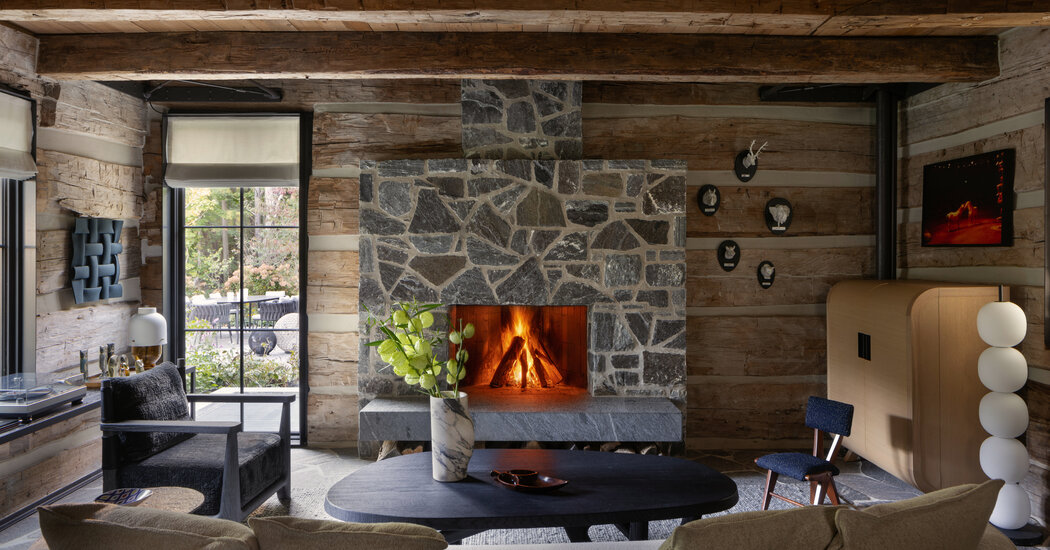
“The design, in my opinion, embodies the tension between wreckage and sophistication,” said Mr. El-Abdallah, who juxtaposed the rustic aesthetic of the cottage with fine contemporary pieces from Mr. Weishaupt’s furniture company.
He and Mr Weissoput worked together to keep the interior open. On the ground floor there is a living and dining space and a kitchenette. Upstairs is a single bedroom with desk. The new basement is used as a spa bathroom, but also offers storage and laundry.
Inside the front door they installed local granite slab flooring with radiant heating and a new granite fireplace. To make the most of every square inch, they pushed the stairwell to one side and placed kitchen cabinets by French designer Christophe Delcourt at the foot of the stairs. Next to it, they installed a custom bench designed by Mr. Delcott to define the dining space and act as a balustrade for the stairs leading to the basement.
Upstairs, they milled Douglas-fir floors from a log they found on the property and vaulted the ceiling, leaving the original beams exposed. For the basement bathroom, Mr. Weishaupt sourced a walnut shell tub from Nina Mair and custom-made Nymphenburg Tile wall tiles depicting various animals (owl, hare, fox), while Mr. El-Abdallah designed the custom millwork throughout.
Outside, landscaping firm Coivic planted fruit trees and created a cut flower garden, a vegetable garden and stepped patios for lounging and dining, complete with an outdoor shower and cedar hot tub.
Construction began in February 2021 and took approximately 18 months with approximately $1.8 million in renovations and approximately $375,000 in landscaping. During that time, Mr Weishaupt remained on the property in his Airstream trailer.
“Obviously, it would be faster and cheaper to build something new” — and on a larger scale, Weishaupt said. But he firmly believes that the effort and expense are worth it. This home cannot be easily replicated.
Mr Weishaupt, who has named his property Yellowwood, is building more and has a vision of one day making it a cultural destination focused on design, art and nature.
“I’m very happy here,” he said. “This is me.”
Small Living is a bi-weekly column that explores what it takes to live a simpler, more sustainable or more compact life.
For weekly email updates on residential real estate news, sign up here.